Barbican Opens New Exhibit: "Laurie Anderson, Trisha Brown, Gordon Matta-Clark: Pioneers of the Downtown Scene, New York 1970s"

Browse by:
Year
Browse by:
Publish date (field_publish_date)
Submitted by nonesuch on
Article Type
Publish date
Excerpt

The work Laurie Anderson created while living in downtown New York City in the 1970s is inextricably linked to the place and time in which it was made. These are the focus of a new exhibit opening today at the Barbican Art Gallery in London titled Laurie Anderson, Trisha Brown, Gordon Matta-Clark: Pioneers of the Downtown Scene, New York 1970s. Anderson will be speaking about her work with Robert Storr, dean of the Yale University School of Art, at the 92nd Street Y in New York City next Thursday.

Copy

The work Laurie Anderson created while living in downtown New York City in the 1970s is inextricably linked to the place and time in which it was made. These are the focus of a new exhibit opening today at the Barbican Art Gallery in London titled Laurie Anderson, Trisha Brown, Gordon Matta-Clark: Pioneers of the Downtown Scene, New York 1970s.

The new exhibit, which runs through May 22, is the first major presentation to examine the experimental and often daring approaches—from dancing on rooftops to cutting fragments out of abandoned buildings—taken by these three leading figures in the rough-and-ready arts scene developing in downtown Manhattan during the 1970s. Anderson, choreographer Trisha Brown, and artist Gordon Matta-Clark were friends and active participants in the New York art community, working fluidly between visual art and performance.

The exhibition, curated by Lydia Yee, brings together around 160 works by Anderson, Brown, and Matta-Clark, many rarely seen, with some presented for the first time outside New York. Featuring sculptures, drawings, photographs, films, live performances and mixed media works, as well as posters, documentation and other ephemera, the exhibition focuses on the intersections between their practices and explores their mutual concerns—performance, the urban environment and an emphasis on process and experimentation.

New York City provided a powerful context for the work of Anderson, Brown and Matta-Clark. On the verge of bankruptcy in the 1970s, and faced with the disappearance of manufacturing industries, the city was turning into a centre of widespread unemployment and lawlessness. In search of large, cheap spaces, artists responded by converting derelict buildings into live-work lofts, to make and exhibit their work. These artists sought to distance themselves from the dominant artistic movements of the 1960s, Pop art and Minimalism, in which the object was paramount. Taking art out of the conventional gallery context and performance off the stage, they used the city as the setting for their work. Performances took place in the streets, on buildings and in the cavernous artist loft spaces in downtown New York.

Some of Laurie Anderson’s earliest works took place in downtown New York and were informed by conceptual and street performance. For Institutional Dream Series (1972), Anderson slept in public places in an attempt to determine if specific sites influenced her dreams. Anderson’s early work introduced the combination of image and text that remain a constant narrative device throughout her work. Also on view are a number of her early sculptural works that foreground her interest in storytelling and experimentation with sound.

For more information on the exhibit, visit barbican.org.

Laurie Anderson will be speaking about her work with Robert Storr, dean of the Yale University School of Art, at the 92nd Street Y in New York City next Thursday, March 10. In advance of the event, Anderson spoke with New York magazine about her life in the city, which you can read at nymag.com.

To peruse Laurie Anderson's Nonesuch catalog, including her latest album, Homeland, visit the Nonesuch Store now.

featuredimage
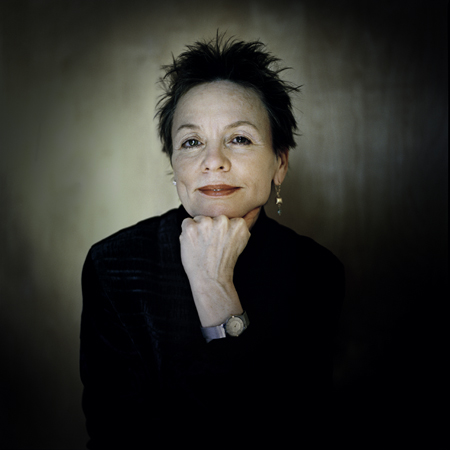
Laurie Anderson 2010 by Tim Knox
  • Thursday, March 3, 2011
    Barbican Opens New Exhibit: "Laurie Anderson, Trisha Brown, Gordon Matta-Clark: Pioneers of the Downtown Scene, New York 1970s"
    Tim Knox

    The work Laurie Anderson created while living in downtown New York City in the 1970s is inextricably linked to the place and time in which it was made. These are the focus of a new exhibit opening today at the Barbican Art Gallery in London titled Laurie Anderson, Trisha Brown, Gordon Matta-Clark: Pioneers of the Downtown Scene, New York 1970s.

    The new exhibit, which runs through May 22, is the first major presentation to examine the experimental and often daring approaches—from dancing on rooftops to cutting fragments out of abandoned buildings—taken by these three leading figures in the rough-and-ready arts scene developing in downtown Manhattan during the 1970s. Anderson, choreographer Trisha Brown, and artist Gordon Matta-Clark were friends and active participants in the New York art community, working fluidly between visual art and performance.

    The exhibition, curated by Lydia Yee, brings together around 160 works by Anderson, Brown, and Matta-Clark, many rarely seen, with some presented for the first time outside New York. Featuring sculptures, drawings, photographs, films, live performances and mixed media works, as well as posters, documentation and other ephemera, the exhibition focuses on the intersections between their practices and explores their mutual concerns—performance, the urban environment and an emphasis on process and experimentation.

    New York City provided a powerful context for the work of Anderson, Brown and Matta-Clark. On the verge of bankruptcy in the 1970s, and faced with the disappearance of manufacturing industries, the city was turning into a centre of widespread unemployment and lawlessness. In search of large, cheap spaces, artists responded by converting derelict buildings into live-work lofts, to make and exhibit their work. These artists sought to distance themselves from the dominant artistic movements of the 1960s, Pop art and Minimalism, in which the object was paramount. Taking art out of the conventional gallery context and performance off the stage, they used the city as the setting for their work. Performances took place in the streets, on buildings and in the cavernous artist loft spaces in downtown New York.

    Some of Laurie Anderson’s earliest works took place in downtown New York and were informed by conceptual and street performance. For Institutional Dream Series (1972), Anderson slept in public places in an attempt to determine if specific sites influenced her dreams. Anderson’s early work introduced the combination of image and text that remain a constant narrative device throughout her work. Also on view are a number of her early sculptural works that foreground her interest in storytelling and experimentation with sound.

    For more information on the exhibit, visit barbican.org.

    Laurie Anderson will be speaking about her work with Robert Storr, dean of the Yale University School of Art, at the 92nd Street Y in New York City next Thursday, March 10. In advance of the event, Anderson spoke with New York magazine about her life in the city, which you can read at nymag.com.

    To peruse Laurie Anderson's Nonesuch catalog, including her latest album, Homeland, visit the Nonesuch Store now.

    Journal Articles:Artist News

Enjoy This Post?

Get weekly updates right in your inbox.
terms

X By submitting my information, I agree to receive personalized updates and marketing messages about Nonesuch based on my information, interests, activities, website visits and device data and in accordance with the Privacy Policy. I understand that I can opt-out at any time by emailing privacypolicy@wmg.com.

Thank you!
x

Welcome to Nonesuch's mailing list!

Customize your notifications for tour dates near your hometown, birthday wishes, or special discounts in our online store!
terms

By submitting my information, I agree to receive personalized updates and marketing messages about Nonesuch based on my information, interests, activities, website visits and device data and in accordance with the Privacy Policy. I understand that I can opt-out at any time by emailing privacypolicy@wmg.com.

Related Posts

  • Tuesday, April 16, 2024
    Tuesday, April 16, 2024

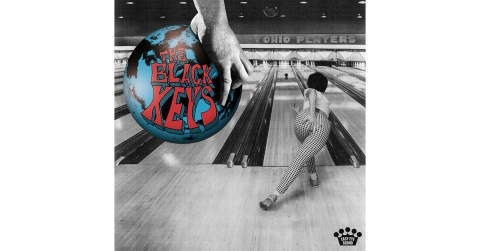
    The Black Keys have secured the No. 1 Current Rock Album and No. 1 Current Alternative Album in US sales following the release of their new album, Ohio Players, last week. The album also is the highest debut of the week on Billboard’s Top Rock Albums Chart and Top Alternative Albums Chart, at No. 5 on both charts, and has reached No. 4 on Overall Current Album sales and No. 26 on the Billboard 200. Internationally, Ohio Players is the band’s sixth consecutive top 20 album in the UK, as well as top 20 in Austria, Belgium, France, Germany, Netherlands, New Zealand, and Switzerland, among others. 

    Journal Topics: Album ReleaseArtist NewsReviews
  • Tuesday, April 16, 2024
    Tuesday, April 16, 2024

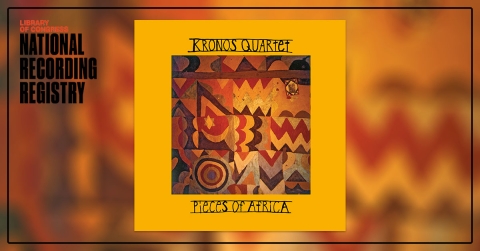
    Congratulations to Kronos Quartet, whose acclaimed 1992 Nonesuch album Pieces of Africa has been named one of twenty-five recordings to be inducted into the National Recording Registry at the Library of Congress for 2024. "It planted a seed for our work," Kronos founder and violinist David Harrington says of the album. "It's flowered so beautifully."

    Journal Topics: Artist News