Jonny Greenwood Featured in New York Times Magazine, Tracing His Composing Roots to Penderecki and Radiohead

Browse by:
Year
Browse by:
Publish date (field_publish_date)
Submitted by nonesuch on
Article Type
Publish date
Excerpt

The new album pairing works by Polish composer Krzysztof Penderecki with the works they inspired by Jonny Greenwood is due out next week. Greenwood is the subject of an extensive feature article in this Sunday's New York Times Magazine that traces the roots of his compositions to his appreciation for Penderecki's music, through his own film scores and to the ever-evolving sounds of Radiohead. "Greenwood cites an early-’90s concert of Penderecki’s music as a conversion experience," says the Times; "he’s obsessed with Penderecki the way a lot of people are obsessed with Radiohead."

Copy

The new album pairing Polish composer Krzysztof Penderecki's Threnody for the Victims of Hiroshima and Polymorphia (for 48 strings) with the works they inspired by composer/guitarist Jonny Greenwood, Popcorn Superhet Receiver and 48 Responses to Polymorphia, is due out next week on Nonesuch Records. Before then, Greenwood is the subject of an extensive feature article that will be published in this Sunday's New York Times Magazine.

The article, titled "Radiohead's Runaway Guitarist," opens with writer Alex Pappademas joining Greenwood at Alvernia Studios outside of Krakow, Poland, last fall as the album is being recording, then traces the roots of Greenwood's compositions to his appreciation for the avant-garde music of Penderecki, through his own film scores as well as his contributions to the ever-evolving sounds of Radiohead.

"Greenwood cites an early-’90s concert of Penderecki’s music as a conversion experience; he’s obsessed with Penderecki the way a lot of people are obsessed with Radiohead," writes Pappademas. "So there was something full-circle about the Sept. 12 session, given that Greenwood owes his profile as a classical composer in large part to his work in film, particularly his deeply Penderecki-indebted score for Paul Thomas Anderson’s There Will Be Blood.”

While recent history has provided numerous examples of rock and pop stars delving into the classical world with less than stellar success, "Greenwood is an anomaly," Pappademas asserts: "a musician who made his name with a rock band and who is now embraced by the modern-music establishment as an actual, serious composer," not least by Steve Reich whom the article quotes as crediting Greenwood's Popcorn Superhet Receiver with offering “the first new approach to pizzicato since Bartok.”

Greenwood's ability to create music outside the traditional pop/rock realm should not be news to Radiohead fans, given how the band has moved away from more traditional rock-band structures and instrumentation and Greenwood has moved from lead guitar to master multi-instrumentalist.

Greenwood's Radiohead band mate Thom Yorke tells the Times: “Jonny likes having the ground pulled out from under him, musically. More than any of us. Which is a constant source of relief to me, because I’m the same way, but I don’t know how to get there, usually."

You can read the complete article now at nytimes.com, where you can also hear a track from the new album, "Pacay Tree" from Greenwood's 48 Responses to Polymorphia. To reserve a copy of the album, head to the Nonesuch Store, where orders include 320 kbp MP3s of the album available to download starting Tuesday.

featuredimage
Jonny Greenwood sq
  • Friday, March 9, 2012
    Jonny Greenwood Featured in New York Times Magazine, Tracing His Composing Roots to Penderecki and Radiohead
    Jason Evans

    The new album pairing Polish composer Krzysztof Penderecki's Threnody for the Victims of Hiroshima and Polymorphia (for 48 strings) with the works they inspired by composer/guitarist Jonny Greenwood, Popcorn Superhet Receiver and 48 Responses to Polymorphia, is due out next week on Nonesuch Records. Before then, Greenwood is the subject of an extensive feature article that will be published in this Sunday's New York Times Magazine.

    The article, titled "Radiohead's Runaway Guitarist," opens with writer Alex Pappademas joining Greenwood at Alvernia Studios outside of Krakow, Poland, last fall as the album is being recording, then traces the roots of Greenwood's compositions to his appreciation for the avant-garde music of Penderecki, through his own film scores as well as his contributions to the ever-evolving sounds of Radiohead.

    "Greenwood cites an early-’90s concert of Penderecki’s music as a conversion experience; he’s obsessed with Penderecki the way a lot of people are obsessed with Radiohead," writes Pappademas. "So there was something full-circle about the Sept. 12 session, given that Greenwood owes his profile as a classical composer in large part to his work in film, particularly his deeply Penderecki-indebted score for Paul Thomas Anderson’s There Will Be Blood.”

    While recent history has provided numerous examples of rock and pop stars delving into the classical world with less than stellar success, "Greenwood is an anomaly," Pappademas asserts: "a musician who made his name with a rock band and who is now embraced by the modern-music establishment as an actual, serious composer," not least by Steve Reich whom the article quotes as crediting Greenwood's Popcorn Superhet Receiver with offering “the first new approach to pizzicato since Bartok.”

    Greenwood's ability to create music outside the traditional pop/rock realm should not be news to Radiohead fans, given how the band has moved away from more traditional rock-band structures and instrumentation and Greenwood has moved from lead guitar to master multi-instrumentalist.

    Greenwood's Radiohead band mate Thom Yorke tells the Times: “Jonny likes having the ground pulled out from under him, musically. More than any of us. Which is a constant source of relief to me, because I’m the same way, but I don’t know how to get there, usually."

    You can read the complete article now at nytimes.com, where you can also hear a track from the new album, "Pacay Tree" from Greenwood's 48 Responses to Polymorphia. To reserve a copy of the album, head to the Nonesuch Store, where orders include 320 kbp MP3s of the album available to download starting Tuesday.

    Journal Articles:Artist News

Enjoy This Post?

Get weekly updates right in your inbox.
terms

X By submitting my information, I agree to receive personalized updates and marketing messages about Nonesuch based on my information, interests, activities, website visits and device data and in accordance with the Privacy Policy. I understand that I can opt-out at any time by emailing privacypolicy@wmg.com.

Thank you!
x

Welcome to Nonesuch's mailing list!

Customize your notifications for tour dates near your hometown, birthday wishes, or special discounts in our online store!
terms

By submitting my information, I agree to receive personalized updates and marketing messages about Nonesuch based on my information, interests, activities, website visits and device data and in accordance with the Privacy Policy. I understand that I can opt-out at any time by emailing privacypolicy@wmg.com.

Related Posts

  • Tuesday, April 16, 2024
    Tuesday, April 16, 2024

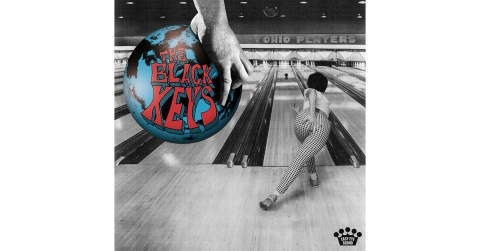
    The Black Keys have secured the No. 1 Current Rock Album and No. 1 Current Alternative Album in US sales following the release of their new album, Ohio Players, last week. The album also is the highest debut of the week on Billboard’s Top Rock Albums Chart and Top Alternative Albums Chart, at No. 5 on both charts, and has reached No. 4 on Overall Current Album sales and No. 26 on the Billboard 200. Internationally, Ohio Players is the band’s sixth consecutive top 20 album in the UK, as well as top 20 in Austria, Belgium, France, Germany, Netherlands, New Zealand, and Switzerland, among others. 

    Journal Topics: Album ReleaseArtist NewsReviews
  • Tuesday, April 16, 2024
    Tuesday, April 16, 2024

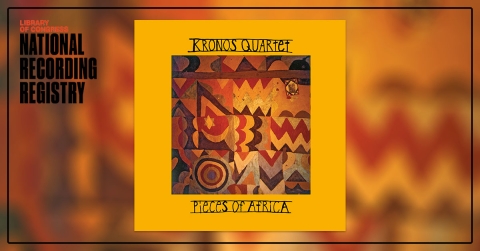
    Congratulations to Kronos Quartet, whose acclaimed 1992 Nonesuch album Pieces of Africa has been named one of twenty-five recordings to be inducted into the National Recording Registry at the Library of Congress for 2024. "It planted a seed for our work," Kronos founder and violinist David Harrington says of the album. "It's flowered so beautifully."

    Journal Topics: Artist News