Listen: Laurie Anderson Launches "Party in the Bardo" Radio Program on WESU

Browse by:
Year
Browse by:
Publish date (field_publish_date)
Submitted by nonesuch on
Article Type
Publish date
Excerpt

Laurie Anderson's new radio show, Party in the Bardo: Conversations with Laurie Anderson, premiered on WESU Middletown 88.1FM today—her birthday—and can be heard online for two weeks via WESU. "We are in a national emergency, with no boundaries, an emergency that keeps shifting from day to day, as marches and protests demanding racial equality and justice for George Floyd happen all over the country and all over the world," she says. "The pandemic has kept many people isolated for weeks or months with no definite end in sight. And what's amazing is that what finally brings people flooding out into the streets is not anger or greed or fear. It is a tremendous surge of empathy. It is a passionate and shared and long overdue outrage, a huge and global cry for justice. And this is being met by the President of the United States not with gratitude for the sense of fairness in the American people. No, this movement of empathy and fairness and solidarity is being met with tanks and threats. It's almost as if the surge of goodness itself cannot be tolerated, because it cannot be understood."

Copy

Laurie Anderson's new radio show, Party in the Bardo: Conversations with Laurie Anderson, premiered on WESU Middletown 88.1FM at 4am ET this morning, June 5, 2020—her birthday—followed by an encore broadcast at 4pm ET. It is also available to stream via WESU for two weeks following the initial broadcast; you can listen again here. The episodes begins this way:

"It's June 5, 2020, and we are in a national emergency, with no boundaries, an emergency that keeps shifting from day to day, as marches and protests demanding racial equality and justice for George Floyd happen all over the country and all over the world," Anderson says in her introduction to the debut episode. "The pandemic has kept many people isolated for weeks or months with no definite end in sight. And what's amazing is that what finally brings people flooding out into the streets is not anger or greed or fear. It is a tremendous surge of empathy. It is a passionate and shared and long overdue outrage, a huge and global cry for justice. And this is being met by the President of the United States not with gratitude for the sense of fairness in the American people. No, this movement of empathy and fairness and solidarity is being met with tanks and threats. It's almost as if the surge of goodness itself cannot be tolerated, because it cannot be understood.

"Of course, many things happen around this moment that cloud the picture: The movement is leaderless; many marchers have no experience with provocateurs, or self-defense, or what to do if attacked or arrested. The movement has many sides. Some people are forced out of isolation by hunger; many are out of work, suddenly homeless. There's looting and aggression by people who want to create chaos and fear. We are polarized. And here we are in the Bardo, in the pause between two realities, in a time when nobody knows what's next."

In that first episode, Laurie Anderson speaks with writer Jonathan Cott, a contributing editor at Rolling Stone and the recent author of Listening: Interviews 1970-1989, about time and hesitation. Cott and Anderson share and discuss music by Chopin, Bach, Monk, Messiaen, and more, including "Song for Bob," which Anderson wrote for Nonesuch President Bob Hurwitz on his transition to Chairman Emeritus and which composer/pianist Timo Andres performs on the new Nonesuch album I Still Play. The first episode is dedicated to their friend and music producer Hal Willner, who passed away from COVID-19 in New York City in April.

Party in the Bardo: Conversations with Laurie Anderson features Anderson in conversation with close friends and colleagues as the world grapples with the global pandemic.

“Since the early ‘80s, I’ve dreamed of ... having a radio show in the middle of the night” said Anderson. “When time slows down, where the lines between sleeping and waking, between dreams and reality, are getting blurred, and when people’s defenses drop away, and logic just seems to be very limiting.”

For more information and to find upcoming episodes as they become available, visit wesleyan.edu.

featuredimage
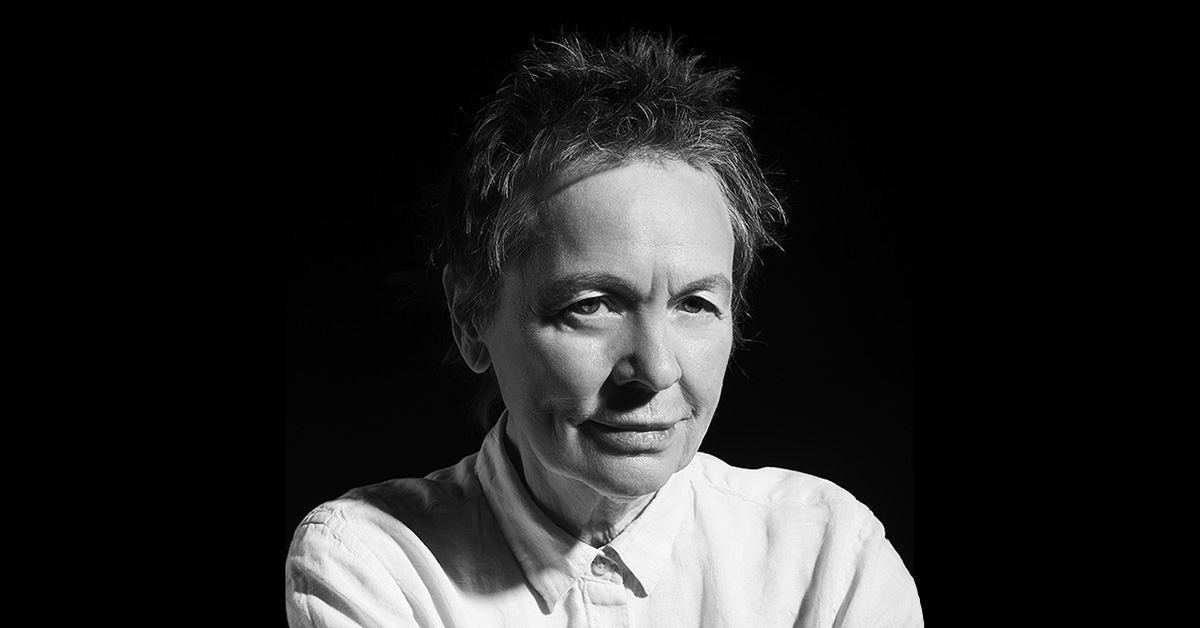
Laurie Anderson 2019 by Alaric Campbell portrait
  • Friday, June 5, 2020
    Listen: Laurie Anderson Launches "Party in the Bardo" Radio Program on WESU
    Alaric Campbell

    Laurie Anderson's new radio show, Party in the Bardo: Conversations with Laurie Anderson, premiered on WESU Middletown 88.1FM at 4am ET this morning, June 5, 2020—her birthday—followed by an encore broadcast at 4pm ET. It is also available to stream via WESU for two weeks following the initial broadcast; you can listen again here. The episodes begins this way:

    "It's June 5, 2020, and we are in a national emergency, with no boundaries, an emergency that keeps shifting from day to day, as marches and protests demanding racial equality and justice for George Floyd happen all over the country and all over the world," Anderson says in her introduction to the debut episode. "The pandemic has kept many people isolated for weeks or months with no definite end in sight. And what's amazing is that what finally brings people flooding out into the streets is not anger or greed or fear. It is a tremendous surge of empathy. It is a passionate and shared and long overdue outrage, a huge and global cry for justice. And this is being met by the President of the United States not with gratitude for the sense of fairness in the American people. No, this movement of empathy and fairness and solidarity is being met with tanks and threats. It's almost as if the surge of goodness itself cannot be tolerated, because it cannot be understood.

    "Of course, many things happen around this moment that cloud the picture: The movement is leaderless; many marchers have no experience with provocateurs, or self-defense, or what to do if attacked or arrested. The movement has many sides. Some people are forced out of isolation by hunger; many are out of work, suddenly homeless. There's looting and aggression by people who want to create chaos and fear. We are polarized. And here we are in the Bardo, in the pause between two realities, in a time when nobody knows what's next."

    In that first episode, Laurie Anderson speaks with writer Jonathan Cott, a contributing editor at Rolling Stone and the recent author of Listening: Interviews 1970-1989, about time and hesitation. Cott and Anderson share and discuss music by Chopin, Bach, Monk, Messiaen, and more, including "Song for Bob," which Anderson wrote for Nonesuch President Bob Hurwitz on his transition to Chairman Emeritus and which composer/pianist Timo Andres performs on the new Nonesuch album I Still Play. The first episode is dedicated to their friend and music producer Hal Willner, who passed away from COVID-19 in New York City in April.

    Party in the Bardo: Conversations with Laurie Anderson features Anderson in conversation with close friends and colleagues as the world grapples with the global pandemic.

    “Since the early ‘80s, I’ve dreamed of ... having a radio show in the middle of the night” said Anderson. “When time slows down, where the lines between sleeping and waking, between dreams and reality, are getting blurred, and when people’s defenses drop away, and logic just seems to be very limiting.”

    For more information and to find upcoming episodes as they become available, visit wesleyan.edu.

    Journal Articles:Artist NewsRadio

Enjoy This Post?

Get weekly updates right in your inbox.
terms

X By submitting my information, I agree to receive personalized updates and marketing messages about Nonesuch based on my information, interests, activities, website visits and device data and in accordance with the Privacy Policy. I understand that I can opt-out at any time by emailing privacypolicy@wmg.com.

Thank you!
x

Welcome to Nonesuch's mailing list!

Customize your notifications for tour dates near your hometown, birthday wishes, or special discounts in our online store!
terms

By submitting my information, I agree to receive personalized updates and marketing messages about Nonesuch based on my information, interests, activities, website visits and device data and in accordance with the Privacy Policy. I understand that I can opt-out at any time by emailing privacypolicy@wmg.com.

Related Posts

  • Tuesday, April 16, 2024
    Tuesday, April 16, 2024

    The Black Keys have secured the No. 1 Current Rock Album and No. 1 Current Alternative Album in US sales following the release of their new album, Ohio Players, last week. The album also is the highest debut of the week on Billboard’s Top Rock Albums Chart and Top Alternative Albums Chart, at No. 5 on both charts, and has reached No. 4 on Overall Current Album sales and No. 26 on the Billboard 200. Internationally, Ohio Players is the band’s sixth consecutive top 20 album in the UK, as well as top 20 in Austria, Belgium, France, Germany, Netherlands, New Zealand, and Switzerland, among others. 

    Journal Topics: Album ReleaseArtist NewsReviews
  • Tuesday, April 16, 2024
    Tuesday, April 16, 2024

    Congratulations to Kronos Quartet, whose acclaimed 1992 Nonesuch album Pieces of Africa has been named one of twenty-five recordings to be inducted into the National Recording Registry at the Library of Congress for 2024. "It planted a seed for our work," Kronos founder and violinist David Harrington says of the album. "It's flowered so beautifully."

    Journal Topics: Artist News