Steve Reich's "2x5" Premieres in Sold-Out Manchester Festival Opener Tonight

Browse by:
Year
Browse by:
Publish date (field_publish_date)
Submitted by nonesuch on
Article Type
Publish date
Excerpt

Steve Reich's latest creation, 2x5, premieres tonight on a double bill with pioneering electronic music group Kraftwerk, in a sold-out concert to open the Manchester International Festival. Bang On A Can performs the piece with the composer in the sound booth. The piece builds on the framework of Reich's 2009 Pulitzer Prize-winning work, Double Sextet. The Star-Ledger writes of a recent performance of Double Sextet that "both the piece itself and the sense of lifetime achievement came through in full glory." The Guardian, in a feature on the composer, writes, "Reich has been composing for more than 40 years. In that time, he has seen the music he is most closely associated with ... seemingly emerge from nowhere to become one of the dominant musical forms of the age."

Copy

Steve Reich's latest creation, 2x5, premieres tonight on a double bill with pioneering German electronic music group Kraftwerk, in a sold-out concert at the Manchester Velodrome. The event marks the Opening Night of the 2009 Manchester International Festival, where Reich will be present in the crowd of 5,000. Commissioned by the festival in association with Casa da Música (Porto), 2x5 is scored for standard rock band set-up and will be performed by Bang On A Can with the composer in the sound booth.

In 2x5, Reich returns to the heavier rhythmic forms of his early days but expands his palate with rock instrumentation. Scored for two sets of five instruments (hence “2x5”), this 21-minute piece calls for a total of ten musicians: four electric guitars, two pianos, two bass guitars, and two drum sets. Performers can either play the piece all-live with ten musicians or with five live musicians against a pre-recorded tape, as Bang On A Can will do for the premiere.

In this regard, Reich builds on the framework of his 2009 Pulitzer Prize-winning work, Double Sextet (2007), written for two sets of six instruments. Commissioned by eighth blackbird, Double Sextet has enjoyed an international tour of performances with the ensemble since its world premiere on March 26, 2008. As with 2x5, the world premiere of Double Sextet involved pre-recorded tape. A number of all-live performances have since been presented, most recently at the Ojai Music Festival and at Le Poisson Rouge in New York City, as part of a Pulitzer celebration in honor of Reich’s achievement.

New York Times music critic Allan Kozinn, in his review of the Poisson Rouge performance by the Signal ensemble last week, says conductor Brad Lubman "led a clear, vital performance, and Signal made this dense, heavily syncopated score breathe and dance." Read the concert review at nytimes.com.

Star-Ledger reviewer Ronni Reich (no relation to the composer) wrote following the Poisson Rouge concert:

When Steve Reich won the Pulitzer Prize for Music in April, many called the award long overdue. Given his revolutionary body of work, it's hard to argue. But when the new music group Signal performed the winning composition Double Sextet at Le Poisson Rouge Monday night, both the piece itself and the sense of lifetime achievement came through in full glory.

Read the full review at nj.com.

In a feature article in The Guardian this past Sunday, Reich himself explains the connection between the Pulitzer Prize-winning piece and his latest creation. "Some of my players joked that the interlocking pianos of Double Sextet were so strong rhythmically that it was really a rock piece," Reich tells the paper. "So I thought, why not really write a rock piece? I'm over 70 now, but most of the rockers seem to be over 60, so I'm qualified by age."

The article, by interviewer Nicholas Wroe, follows the composer from the scandalous premiere of his piece Four Organs at Carnegie Hall in 1973 to the acceptance of that piece, along with much of Reich's oeuvre, into the cannon. It's a trajectory the fields of rock, jazz, and classical music have followed, too, from once distinct and disparate genres to frequently overlapping often barely distinguishable sources of music.

"Reich has been composing for more than 40 years," writes Wroe. "In that time, he has seen the music he is most closely associated with—generally if restrictively defined as minimalism—seemingly emerge from nowhere to become one of the dominant musical forms of the age."

Read the extensive profile of and interview with the composer at guardian.co.uk.

featuredimage
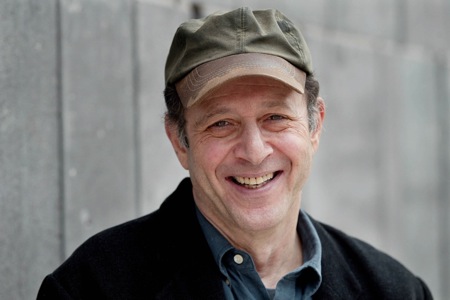
Steve Reich - color
  • Thursday, July 2, 2009
    Steve Reich's "2x5" Premieres in Sold-Out Manchester Festival Opener Tonight
    Wonge Bergmann

    Steve Reich's latest creation, 2x5, premieres tonight on a double bill with pioneering German electronic music group Kraftwerk, in a sold-out concert at the Manchester Velodrome. The event marks the Opening Night of the 2009 Manchester International Festival, where Reich will be present in the crowd of 5,000. Commissioned by the festival in association with Casa da Música (Porto), 2x5 is scored for standard rock band set-up and will be performed by Bang On A Can with the composer in the sound booth.

    In 2x5, Reich returns to the heavier rhythmic forms of his early days but expands his palate with rock instrumentation. Scored for two sets of five instruments (hence “2x5”), this 21-minute piece calls for a total of ten musicians: four electric guitars, two pianos, two bass guitars, and two drum sets. Performers can either play the piece all-live with ten musicians or with five live musicians against a pre-recorded tape, as Bang On A Can will do for the premiere.

    In this regard, Reich builds on the framework of his 2009 Pulitzer Prize-winning work, Double Sextet (2007), written for two sets of six instruments. Commissioned by eighth blackbird, Double Sextet has enjoyed an international tour of performances with the ensemble since its world premiere on March 26, 2008. As with 2x5, the world premiere of Double Sextet involved pre-recorded tape. A number of all-live performances have since been presented, most recently at the Ojai Music Festival and at Le Poisson Rouge in New York City, as part of a Pulitzer celebration in honor of Reich’s achievement.

    New York Times music critic Allan Kozinn, in his review of the Poisson Rouge performance by the Signal ensemble last week, says conductor Brad Lubman "led a clear, vital performance, and Signal made this dense, heavily syncopated score breathe and dance." Read the concert review at nytimes.com.

    Star-Ledger reviewer Ronni Reich (no relation to the composer) wrote following the Poisson Rouge concert:

    When Steve Reich won the Pulitzer Prize for Music in April, many called the award long overdue. Given his revolutionary body of work, it's hard to argue. But when the new music group Signal performed the winning composition Double Sextet at Le Poisson Rouge Monday night, both the piece itself and the sense of lifetime achievement came through in full glory.

    Read the full review at nj.com.

    In a feature article in The Guardian this past Sunday, Reich himself explains the connection between the Pulitzer Prize-winning piece and his latest creation. "Some of my players joked that the interlocking pianos of Double Sextet were so strong rhythmically that it was really a rock piece," Reich tells the paper. "So I thought, why not really write a rock piece? I'm over 70 now, but most of the rockers seem to be over 60, so I'm qualified by age."

    The article, by interviewer Nicholas Wroe, follows the composer from the scandalous premiere of his piece Four Organs at Carnegie Hall in 1973 to the acceptance of that piece, along with much of Reich's oeuvre, into the cannon. It's a trajectory the fields of rock, jazz, and classical music have followed, too, from once distinct and disparate genres to frequently overlapping often barely distinguishable sources of music.

    "Reich has been composing for more than 40 years," writes Wroe. "In that time, he has seen the music he is most closely associated with—generally if restrictively defined as minimalism—seemingly emerge from nowhere to become one of the dominant musical forms of the age."

    Read the extensive profile of and interview with the composer at guardian.co.uk.

    Journal Articles:On TourArtist NewsReviews

Enjoy This Post?

Get weekly updates right in your inbox.
terms

X By submitting my information, I agree to receive personalized updates and marketing messages about Nonesuch based on my information, interests, activities, website visits and device data and in accordance with the Privacy Policy. I understand that I can opt-out at any time by emailing privacypolicy@wmg.com.

Thank you!
x

Welcome to Nonesuch's mailing list!

Customize your notifications for tour dates near your hometown, birthday wishes, or special discounts in our online store!
terms

By submitting my information, I agree to receive personalized updates and marketing messages about Nonesuch based on my information, interests, activities, website visits and device data and in accordance with the Privacy Policy. I understand that I can opt-out at any time by emailing privacypolicy@wmg.com.

Related Posts

  • Monday, April 15, 2024
    Monday, April 15, 2024

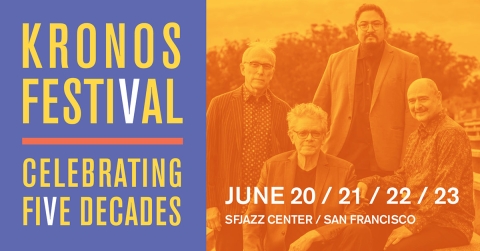
    Kronos Quartet has announced its ninth-annual Kronos Festival, to take place at SFJAZZ Center, June 20–23, 2024. The festival marks the ensemble’s milestone 50th Anniversary year and the farewell performances of John Sherba and Hank Dutt, members of Kronos Quartet for more than 45 years. It will feature a slate of world and Bay Area premieres commissioned as part of the KRONOS Five Decades season; several guest artists; and the final performance of A Thousand Thoughts, a live documentary chronicling the quartet’s career, written and directed by Sam Green and Joe Bini.

    Journal Topics: Artist NewsOn Tour
  • Friday, April 12, 2024
    Friday, April 12, 2024

    Timo Andres joins Alarm Will Sound in Steve Reich's Music for 18 Musicians in College Park and Philadelphia. Cécile McLorin Salvant premieres new piece at 92NY in NYC, where The Magnetic Fields play 69 Love Songs at The Town Hall. Sam Amidon plays with Laura Veirs in Portland and Shahzad Ismaily in Seattle. Hurray for the Riff Raff is in Texas for shows in Fort Worth, Austin, and Houston, where Kronos Quartet live-scores Sam Green's documentary about them. Nathalie Joachim is in Columbus. Mandy Patinkin performs in Peekskill and joins his family in conversation in New London. Sarah Kirkland Snider’s Mass for the Endangered is performed outside Pittsburgh. Chris Thile plays solo in Beaverton and Seattle. Yasmin Williams is in Tysons, VA.

    Journal Topics: On TourWeekend Events